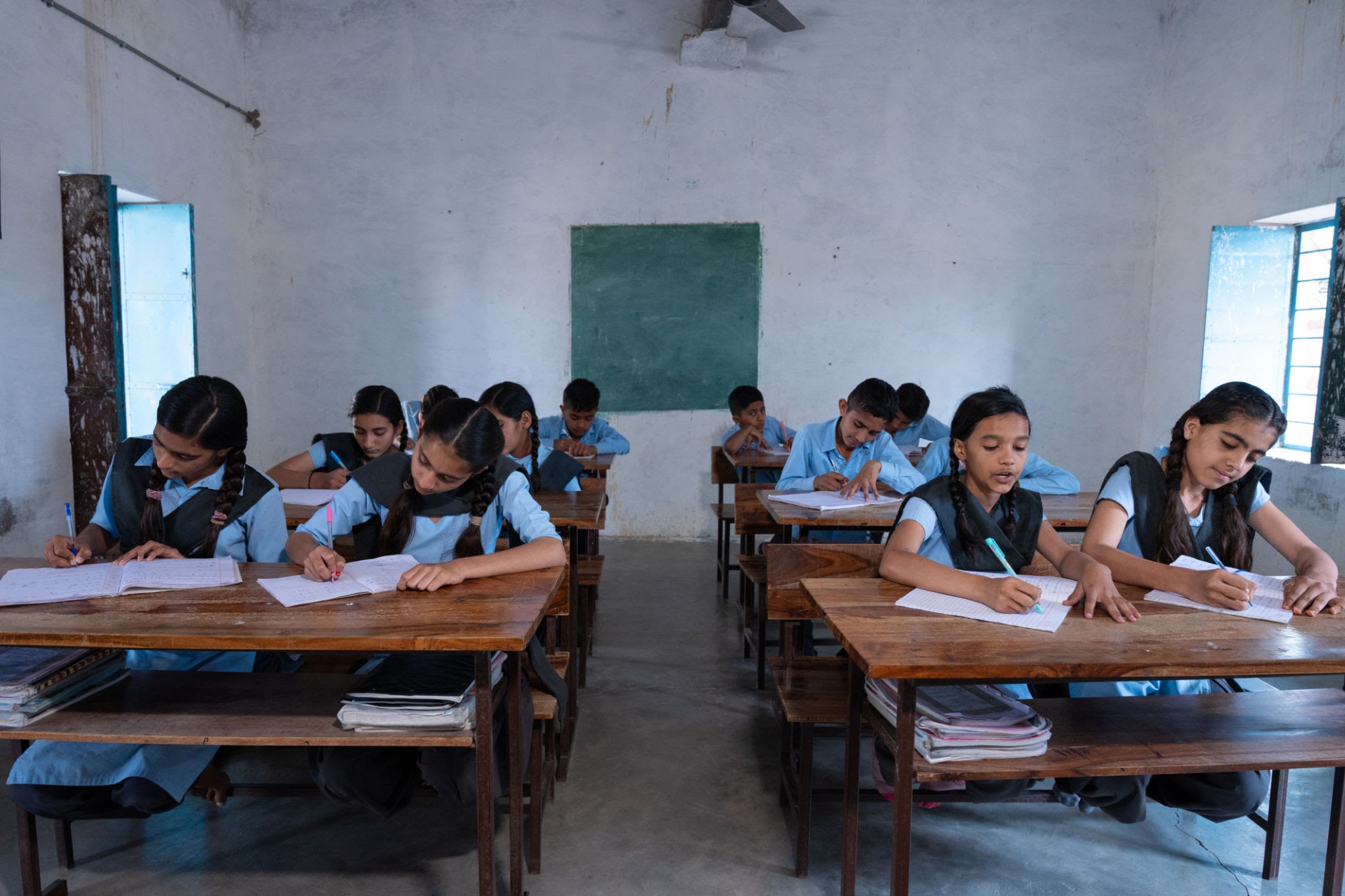
The education system of india is one of the largest and most complex learning networks in the world. Catering to over 250 million school students and tens of millions of higher education enrollees across diverse geographical, linguistic, and socio-economic backgrounds, India’s educational infrastructure is undergoing a historic paradigm shift.
Historically anchored in traditional learning models, the modern education system of india combines rigorous academic standards with progressive policy reforms designed to foster critical thinking, digital literacy, vocational training, and global competitiveness. Understanding its multi-layered structure, governing bodies, regulatory frameworks, and transformative initiatives like the National Education Policy (NEP) is essential for educators, policy experts, students, and global institutions.
1. Evolution and Historical Foundations of Indian Education
To understand the contemporary education system of india, one must trace its journey across three distinct historical epochs:
A. Ancient and Medieval Era (Gurukul System)
In ancient India, education was deeply rooted in holistic development, ethics, philosophy, science, and linguistics.
- The Gurukul Framework: Students resided with their Guru (teacher) in ashrams, learning foundational texts alongside practical life skills, agriculture, archery, medicine, and astronomy.
- Ancient Centers of Higher Learning: Institutions like Nalanda, Takshashila, Vikramashila, and Vallabhi attracted scholars from across Asia, functioning as early precursors to international residential universities.
B. The Colonial Era and Westernization
The modern institutional framework of Indian schooling began taking shape under British colonial rule, marked primarily by Thomas Babington Macaulay’s Minute on Indian Education (1835).
- English Medium Instruction: Shifted official educational focus toward English language proficiency to train administrative personnel.
- University Establishments: The founding of the Universities of Calcutta, Bombay, and Madras in 1857 established the modern university affiliation system that persists in modified forms today.
C. Post-Independence Policy Frameworks
Following independence in 1947, the Indian government prioritized expanding literacy, establishing technical institutes of excellence, and standardizing curricula nation-wide.
- Kothari Commission (1964–66): Recommended a unified national pattern of education, popularizing the $10+2+3$ structural model.
- National Policies on Education (1968 & 1986): Emphasized universal access to primary education, equal opportunities for women and marginalized communities, and the creation of national regulatory bodies.
- Right to Education (RTE) Act, 2009: Made free and compulsory education a fundamental right for children aged 6 to 14 years under Article 21-A of the Indian Constitution.

2. Structural Architecture: School Education in India
The structural foundation of the education system of india is transitioning from the legacy $10+2$ structure to the progressive $5+3+3+4$ curricular design introduced under the National Education Policy.
Comparing Structural Frameworks: Legacy vs. Modern (NEP)
| Dimension / Stage | Legacy 10+2 Framework | Modern 5+3+3+4 Curricular Framework | Targeted Age Group | Core Pedagogical Focus |
| Foundational Stage | Unregulated Anganwadi / Pre-school (Ages 3-6) + Primary Class 1-2 | Unified 5-Year Stage (3 Years Pre-school/Anganwadi + Classes 1 & 2) | Ages 3 to 8 | Play-based, activity-based, discovery learning, and foundational literacy/numeracy |
| Preparatory Stage | Primary School (Classes 3 to 5) | 3-Year Stage (Classes 3 to 5) | Ages 8 to 11 | Gradual transition to interactive classroom learning, reading, writing, physical education, and basic science |
| Middle Stage | Upper Primary / Middle School (Classes 6 to 8) | 3-Year Stage (Classes 6 to 8) | Ages 11 to 14 | Experiential learning in sciences, mathematics, humanities, social sciences, and introductory vocational skills |
| Secondary Stage | Secondary (Classes 9-10) + Higher Secondary (Classes 11-12) | 4-Year Integrated Stage (Classes 9 to 12) | Ages 14 to 18 | Multidisciplinary study, critical thinking, flexible subject selection across streams, and deep conceptual clarity |
3. Key Educational Boards and Governance Bodies
School education in the education system of india is managed by central, state, and private autonomous governing boards.
A. Central Boards
- Central Board of Secondary Education (CBSE): The largest national board, operating under the Union Ministry of Education. It sets standardized curricula, conducts Class 10 and Class 12 board examinations, and aligns closely with competitive entrance exams like JEE and NEET.
- Council for the Indian School Certificate Examinations (CISCE): A private, non-governmental national board known for its comprehensive, literature-heavy, and practical-oriented curriculum (ICSE for Class 10, ISC for Class 12).
- National Institute of Open Schooling (NIOS): An autonomous board providing flexible, distance-learning options for non-traditional learners, working adults, and athletic students.
B. State Boards of Secondary Education
Each state and union territory maintains its own State Board (e.g., Maharashtra State Board, UP Board, Tamil Nadu State Board). State boards design localized syllabi, incorporate regional languages, and govern the vast majority of government-run schools across rural and urban districts.
C. International Boards
To cater to global expatriate communities and international higher education pathways, urban centers host schools affiliated with the International Baccalaureate (IB) and Cambridge Assessment International Education (CAIE).
4. Higher Education Landscape in India
India possesses one of the world’s largest higher education networks, comprising over 1,100 universities, 45,000 colleges, and specialized institutes of national importance.
A. Classification of Higher Education Institutions
- Institutions of National Importance (INIs): Premier autonomous public institutions established by Acts of Parliament, renowned for technological, research, and medical excellence.
- Examples: Indian Institutes of Technology (IITs), Indian Institutes of Management (IIMs), All India Institutes of Medical Sciences (AIIMS), and National Institutes of Technology (NITs).
- Central Universities: Public universities established by an Act of Parliament and funded directly by the central government via the University Grants Commission (UGC) (e.g., Delhi University, Jawaharlal Nehru University, Banaras Hindu University).
- State Universities: Established and funded by state governments to serve regional higher education needs.
- Deemed-to-be Universities: High-performing autonomous institutions granted university-like status and degree-awarding autonomy by the central government on UGC advice.
- Private Universities: Unitary universities established through state legislative acts, funded privately, and offering diverse professional programs.
B. Regulatory and Accreditation Frameworks
- University Grants Commission (UGC): The primary regulatory body responsible for coordinating, determining, and maintaining standards of university education.
- All India Council for Technical Education (AICTE): Regulates technical, engineering, management, and pharmacy education programs.
- National Assessment and Accreditation Council (NAAC): Evaluates and accredits higher education institutions based on quality parameters, grading them from $A^{++}$
5. Major Competitive Entrance Examination Systems
Admission into professional undergraduate and postgraduate courses in the education system of india relies heavily on centralized, high-stakes competitive examinations managed primarily by the National Testing Agency (NTA).
Engineering and Technology
- JEE Main: National entrance exam for admission into NITs, IIITs, and Centrally Funded Technical Institutions (CFTIs).
- JEE Advanced: Secondary tier exam restricted to top JEE Main rankers for securing undergraduate seats across the elite 23 Indian Institutes of Technology (IITs).
Medical and Allied Health Sciences
- NEET (National Eligibility cum Entrance Test): The single unified entrance examination for admission to undergraduate medical (MBBS), dental (BDS), and AYUSH courses across all public and private medical colleges nationwide.
University Admissions
- CUET (Common University Entrance Test): A centralized computerized entrance exam facilitating admissions to undergraduate and postgraduate programs across Central, State, and participating private universities, reducing reliance on high school board cut-off percentages.
6. The National Education Policy (NEP): Transforming the System
Introduced to replace the 34-year-old policy of 1986, the National Education Policy outlines a comprehensive blueprint to transform India’s learning infrastructure into an equitable, vibrant knowledge society.
Core Pillars of the Policy Transformation
- Universal Access & Early Childhood Care (ECCE): Integrating early childhood education into formal schooling to guarantee foundational literacy and numeracy by Class 3 under the NIPUN Bharat mission.
- Multilingualism and Mother Tongue Instruction: Encouraging medium of instruction in regional languages or mother tongues through primary grades (up to Class 5 or 8) to enhance early cognitive comprehension.
- Multidisciplinary Higher Education: Phasing out rigid stream distinctions (Science, Commerce, Arts). Students can pair major subjects like Physics with minors like Music or Economics.
- Academic Bank of Credits (ABC): A digital repository storing credit units earned by students across recognized institutions, enabling flexible multiple entry and exit points during undergraduate degrees:
- Exit after Year 1: Certificate
- Exit after Year 2: Advanced Diploma
- Exit after Year 3: Bachelor’s Degree
- Exit after Year 4: Bachelor’s Degree with Research
- Internationalization of Education: Facilitating top-ranked global universities to set up international campuses in India, while enabling Indian universities to establish overseas branches.
7. Challenges and Critical Reforms Needed
Despite remarkable progress in enrollment ratios and institutional expansion, the education system of india faces distinct structural challenges:
- Rote Learning Dominance: Traditional assessment models still over-emphasize memorization rather than critical thinking, problem-solving, and practical application.
- Quality Variance: Significant disparities persist between elite urban institutions and under-resourced rural government schools regarding teacher-student ratios, digital infrastructure, and physical amenities.
- Employability Gap: Industry reports frequently highlight a skill mismatch, where engineering and general degree graduates require extensive corporate retraining to meet modern technological demands.
- Faculty Shortages: High student-to-teacher ratios across primary schools and vacant sanctioned teaching posts in state universities impact overall learning quality.
Ongoing Government Initiatives Addressing Challenges
- PM SHRI (Prime Minister’s Schools for Rising India): Upgrading over 14,500 schools into exemplar institutions demonstrating NEP implementation.
- DIKSHA & SWAYAM Platforms: National digital repositories offering free online courses, digital textbooks, and open educational resources to bridge the digital divide.
- Vocational Integration (Skill India): Integrating vocational exposure from Class 6 onward to normalize technical trades and hands-on craftsmanship.
Strategic Summary for Navigating Indian Education
Whether evaluating school options or planning higher education pathways, keep these core principles in mind:
- [ ] Understand Curricular Alignment: Match a student’s learning style with the appropriate board (CBSE for competitive exam alignment, CISCE for deep language proficiency, IB/CAIE for global applications).
- [ ] Leverage Flexible Entry-Exit Rules: Utilize the Academic Bank of Credits (ABC) system to tailor higher education journeys across disciplines.
- [ ] Emphasize Foundational Learning: Focus early education efforts on functional literacy, numerical fluency, and conceptual clarity rather than mark-oriented memorization.
- [ ] Track NIRF and NAAC Accreditations: Always check institutional rankings and accreditation grades when evaluating higher education colleges and universities.
How would you like to explore the Indian education system further?
Compare CBSE vs ICSE vs IB curriculum
Examine NEP 2020 implementation roadmap5. Major Competitive Entrance Examination Systems
Admission into professional undergraduate and postgraduate courses in the education system of india relies heavily on centralized, high-stakes competitive examinations managed primarily by the National Testing Agency (NTA).
Engineering and Technology
- JEE Main: National entrance exam for admission into NITs, IIITs, and Centrally Funded Technical Institutions (CFTIs).
- JEE Advanced: Secondary tier exam restricted to top JEE Main rankers for securing undergraduate seats across the elite 23 Indian Institutes of Technology (IITs).
Medical and Allied Health Sciences
- NEET (National Eligibility cum Entrance Test): The single unified entrance examination for admission to undergraduate medical (MBBS), dental (BDS), and AYUSH courses across all public and private medical colleges nationwide.
University Admissions
- CUET (Common University Entrance Test): A centralized computerized entrance exam facilitating admissions to undergraduate and postgraduate programs across Central, State, and participating private universities, reducing reliance on high school board cut-off percentages.
6. The National Education Policy (NEP): Transforming the System
Introduced to replace the 34-year-old policy of 1986, the National Education Policy outlines a comprehensive blueprint to transform India’s learning infrastructure into an equitable, vibrant knowledge society.
Core Pillars of the Policy Transformation
- Universal Access & Early Childhood Care (ECCE): Integrating early childhood education into formal schooling to guarantee foundational literacy and numeracy by Class 3 under the NIPUN Bharat mission.
- Multilingualism and Mother Tongue Instruction: Encouraging medium of instruction in regional languages or mother tongues through primary grades (up to Class 5 or 8) to enhance early cognitive comprehension.
- Multidisciplinary Higher Education: Phasing out rigid stream distinctions (Science, Commerce, Arts). Students can pair major subjects like Physics with minors like Music or Economics.
- Academic Bank of Credits (ABC): A digital repository storing credit units earned by students across recognized institutions, enabling flexible multiple entry and exit points during undergraduate degrees:
- Exit after Year 1: Certificate
- Exit after Year 2: Advanced Diploma
- Exit after Year 3: Bachelor’s Degree
- Exit after Year 4: Bachelor’s Degree with Research
- Internationalization of Education: Facilitating top-ranked global universities to set up international campuses in India, while enabling Indian universities to establish overseas branches.
7. Challenges and Critical Reforms Needed
Despite remarkable progress in enrollment ratios and institutional expansion, the education system of india faces distinct structural challenges:
- Rote Learning Dominance: Traditional assessment models still over-emphasize memorization rather than critical thinking, problem-solving, and practical application.
- Quality Variance: Significant disparities persist between elite urban institutions and under-resourced rural government schools regarding teacher-student ratios, digital infrastructure, and physical amenities.
- Employability Gap: Industry reports frequently highlight a skill mismatch, where engineering and general degree graduates require extensive corporate retraining to meet modern technological demands.
- Faculty Shortages: High student-to-teacher ratios across primary schools and vacant sanctioned teaching posts in state universities impact overall learning quality.
Ongoing Government Initiatives Addressing Challenges
- PM SHRI (Prime Minister’s Schools for Rising India): Upgrading over 14,500 schools into exemplar institutions demonstrating NEP implementation.
- DIKSHA & SWAYAM Platforms: National digital repositories offering free online courses, digital textbooks, and open educational resources to bridge the digital divide.
- Vocational Integration (Skill India): Integrating vocational exposure from Class 6 onward to normalize technical trades and hands-on craftsmanship.
Strategic Summary for Navigating Indian Education
Whether evaluating school options or planning higher education pathways, keep these core principles in mind:
- [ ] Understand Curricular Alignment: Match a student’s learning style with the appropriate board (CBSE for competitive exam alignment, CISCE for deep language proficiency, IB/CAIE for global applications).
- [ ] Leverage Flexible Entry-Exit Rules: Utilize the Academic Bank of Credits (ABC) system to tailor higher education journeys across disciplines.
- [ ] Emphasize Foundational Learning: Focus early education efforts on functional literacy, numerical fluency, and conceptual clarity rather than mark-oriented memorization.
- [ ] Track NIRF and NAAC Accreditations: Always check institutional rankings and accreditation grades when evaluating higher education colleges and universities.
How would you like to explore the Indian education system further?
Compare CBSE vs ICSE vs IB curriculum
Examine NEP 2020 implementation roadmap