In enterprise governance, internal decision-making relies on data discipline. While financial accounting focuses on historical reporting for external stakeholders like investors, tax authorities, and regulators, modern executives depend on cost accounting and management accounting to navigate complex operational realities, optimize resource allocation, and drive sustainable profitability.
Understanding the structural mechanics, key methodologies, and strategic synergies between cost accounting and management accounting is critical for financial analysts, operations leaders, corporate controllers, and business executives.
1. Defining Cost Accounting vs. Management Accounting
Although frequently referenced together, cost accounting and management accounting serve complementary yet distinct operational functions within an organization.
What Is Cost Accounting?
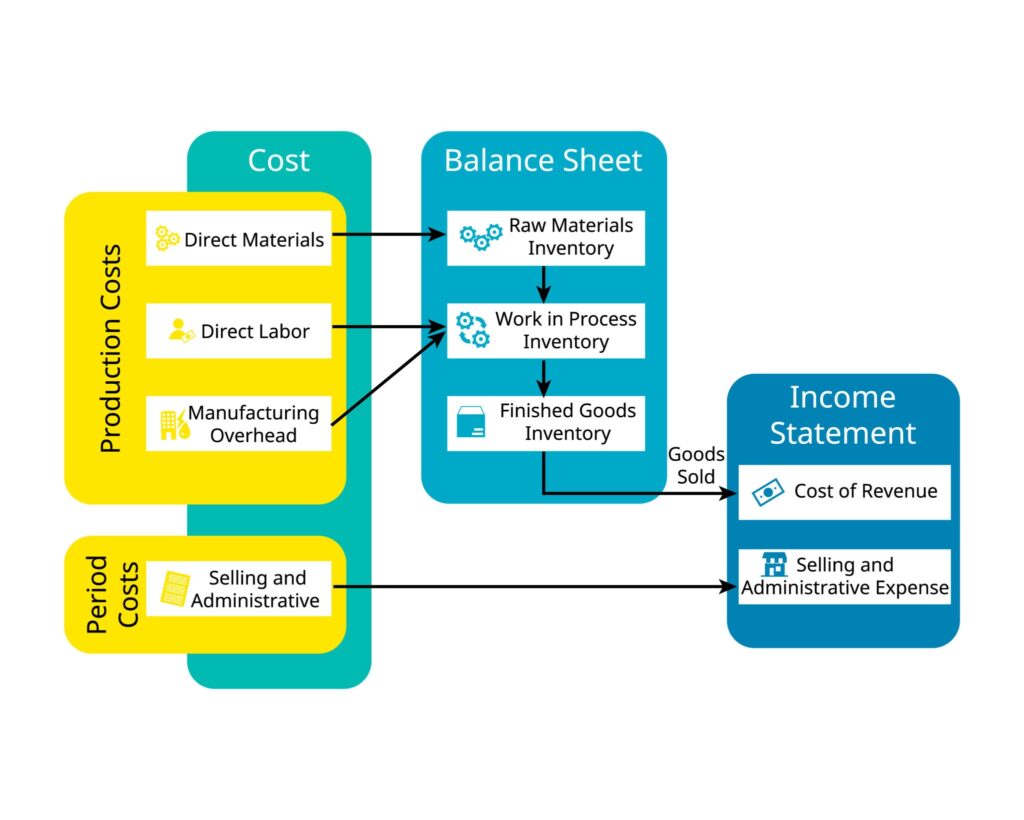
Cost accounting is a specialized quantitative branch of accounting focused on recording, classifying, summarizing, and analyzing a company’s production and operational expenditures. Its primary objective is to determine the exact unit cost of manufacturing a product, delivering a service, or executing a business process.
- Core Focus: Cost ascertainment, inventory valuation, cost control, and operational efficiency.
- Primary Data Type: Quantitative, monetary data rooted in real production metrics.
- Time Horizon: Primarily historical and present operational cycles, used to set standard benchmarks for future runs.
- Regulatory Guidance: Bound in part by inventory valuation standards within GAAP (Generally Accepted Accounting Principles) or IFRS (International Financial Reporting Standards), particularly for external financial reporting.
What Is Management Accounting?
Management accounting (often called managerial accounting) is a broader, forward-looking discipline that combines financial accounting, cost accounting, and non-financial operational metrics to advise management on strategic decision-making, long-term planning, performance evaluation, and risk management.
- Core Focus: Strategic decision-making, forecasting, capital budgeting, and organizational control.
- Primary Data Type: A blend of quantitative financial data, cost metrics, qualitative qualitative insights, market trends, and operational Key Performance Indicators (KPIs).
- Time Horizon: Emphatically future-oriented (projections, scenario planning, predictive modeling).
- Regulatory Guidance: Completely unconstrained by GAAP or IFRS, as reports are produced solely for internal corporate consumption.
2. Structural Comparison: Cost Accounting vs. Management Accounting
To understand how these disciplines interact within a enterprise corporate environment, review their core operational attributes side by side:
| Attribute | Cost Accounting | Management Accounting |
| Primary Scope | Specific products, processes, departments, or inventory units | The entire business enterprise, market position, and strategic growth |
| Primary Audience | Internal operations managers, plant supervisors, and financial accountants | Executive leadership, Board of Directors, department heads, and strategists |
| Data Sources | Production logs, labor hours, material requisitions, and operational expenses | Cost accounting outputs, market trends, competitive intelligence, and financial statements |
| Key Objectives | Ascertain product costs, establish cost controls, and evaluate inventory | Drive strategic planning, optimize resource allocation, and enhance corporate valuation |
| Frequency of Reporting | Continuous, daily, or weekly operational runs and batch reports | Periodic quarterly reviews, annual budgets, and ad-hoc strategic evaluations |
| Rules & Standards | Standardized cost allocation procedures (e.g., CASB, GAAP absorption standards) | No mandatory external reporting standards; designed entirely around leadership requirements |
3. Fundamental Cost Accounting Systems and Methodologies
Cost accounting utilizes established mathematical frameworks to capture overhead, direct labor, and raw material inputs.
A. Cost Classification
Costs are classified by their behavior and allocation mechanism:
- Direct Costs: Expenditures directly traceable to a specific cost object (e.g., raw steel used in automobile production, direct assembly line labor).
- Indirect Costs (Overhead): Shared expenditures that cannot be efficiently traced to a single unit (e.g., factory utility bills, equipment maintenance, supervisor salaries).
- Fixed Costs: Expenditures that remain constant across operational activity levels within a relevant range (e.g., commercial factory lease payments).
- Variable Costs: Expenses that scale proportionally with output volume (e.g., packaging material, raw input stock).
B. Standard Cost Accounting Systems
1. Job Order Costing
Applied in environments where goods or services are custom-built in distinct batches or jobs (e.g., custom machine manufacturing, commercial construction, specialized consulting engagements). Costs are accumulated separately for each specific job order.
2. Process Costing
Utilized in mass-production environments where identical products pass through continuous processing stages (e.g., chemical refining, beverage bottling, paper manufacturing). Costs are averaged across total units produced during a specific time window:
$$\text{Unit Cost} = \frac{\text{Total Production Costs (Direct Materials + Direct Labor + Overhead)}}{\text{Total Equivalent Units Produced}}$$
3. Activity-Based Costing (ABC)
Traditional overhead allocation assigns indirect costs based on simple drivers like direct labor hours. In modern automated environments, this distorts true product profitability. Activity-Based Costing (ABC) assigns overhead costs by identifying specific activity pools (e.g., machine setups, quality inspections, purchase orders) and allocating costs based on actual consumption drivers.
$$\text{Activity Cost Rate} = \frac{\text{Total Cost Pool Budget}}{\text{Total Driver Volume}}$$
4. Key Management Accounting Tools for Strategic Decision-Making
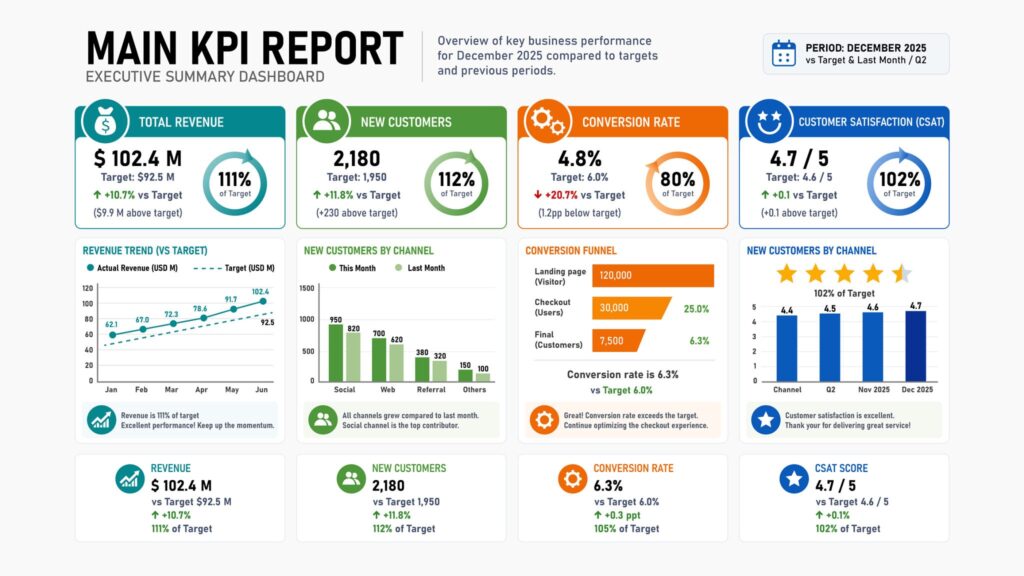
Management accounting transforms cost metrics into actionable corporate strategy through sophisticated modeling techniques.
A. Cost-Volume-Profit (CVP) & Break-Even Analysis
CVP analysis models how changes in costs, production volume, and selling price impact net operating income. The Break-Even Point (BEP) represents the volume where total revenues equal total costs:
$$\text{Break-Even Point (Units)} = \frac{\text{Total Fixed Costs}}{\text{Price per Unit} – \text{Variable Cost per Unit}}$$
The denominator ($\text{Price} – \text{Variable Cost}$) is known as the Contribution Margin per Unit.
B. Capital Budgeting and Investment Appraisal
When evaluating long-term capital investments—such as acquiring new production facilities, upgrading technology, or launching new product lines—management accounting employs discounted cash flow (DCF) frameworks:
- Net Present Value (NPV): Measures the net current value of expected future cash inflows discounted at the company’s hurdle rate ($r$):
$$\text{NPV} = \sum_{t=1}^{n} \frac{C_t}{(1 + r)^t} – C_0$$
C. Variance Analysis & Performance Management
Variance analysis compares actual financial and operational outcomes against pre-established standard budgets. By calculating Material Price Variances, Labor Efficiency Variances, and Overhead Volume Variances, management accountants pinpoint operational bottlenecks and budget overruns before they jeopardize annual margins.
5. Integrating Cost Accounting and Management Accounting for Business Growth
When operating in tandem, cost accounting and management accounting create a continuous feedback loop that powers corporate financial planning and execution.
┌───────────────────────────────────────────────────────────┐
│                    COST ACCOUNTING                        │
│ Data Collection -> Cost Classification -> Unit Costing     │
└─────────────────────────────┬─────────────────────────────┘
                              │
                              ▼ (Feeds Cost & Variance Metrics)
┌───────────────────────────────────────────────────────────┐
│                 MANAGEMENT ACCOUNTING                     │
│ CVP Analysis -> Capital Allocation -> Strategic Forecasting│
└─────────────────────────────┬─────────────────────────────┘
                              │
                              ▼ (Drives Strategic Decisions)
┌───────────────────────────────────────────────────────────┐
│                   EXECUTIVE LEADERSHIP                    │
│ Pricing Strategy -> Expansion -> Margin Optimization       │
└───────────────────────────────────────────────────────────┘
- Cost Accounting captures granular, bottom-up manufacturing and service metrics.
- Management Accounting contextually aggregates these cost metrics alongside market demand, competitive threats, and balance sheet realities.
- Executive Leadership acts on these insights to adjust pricing strategies, discontinue non-performing product lines, negotiate vendor contracts, or greenlight capital expansions.
Strategic Checklist for Financial Operations
To build a resilient internal accounting function, ensure your team executes these foundational steps:
- [ ] Transition from traditional direct-labor overhead allocations to Activity-Based Costing (ABC) for accurate product margin visibility.
- [ ] Establish automated monthly variance analysis tracking to detect raw material price inflation and labor inefficiencies early.
- [ ] Align managerial accounting reporting with non-financial operational KPIs (e.g., customer acquisition cost, machine downtime, scrap rates).
- [ ] Run sensitivity-tested Cost-Volume-Profit (CVP) models prior to authorizing product line expansions or price adjustments.
- [ ] Ensure capital budgeting appraisals evaluate Net Present Value (NPV) alongside qualitative strategic fit.
Want to build a CVP or variance analysis framework for your business?Yes