Meta Description: Learn website design step by step with this beginner-friendly guide. Master essential skills, tools, and best practices to create stunning websites. Start today!
Introduction
Every great website begins with a simple idea. Yet many beginners feel overwhelmed when they see polished websites and wonder, “How can I ever create something like that?”
The truth is that website design is not about magic—it’s about learning the right principles, practicing consistently, and turning creativity into a digital experience. Whether you dream of becoming a freelance designer, building your own business website, or launching an online portfolio, this guide will help you take your first confident steps.
What Is Website Design?
Website design is the process of planning, creating, and arranging the visual appearance and functionality of a website. It combines creativity with usability to deliver an engaging experience for visitors.
A successful website includes:
- Attractive layouts
- Easy navigation
- Responsive design
- Fast loading speed
- High-quality content
- User-friendly interface
Think of a website as your digital home. Every page is a room, every button is a doorway, and every visitor should feel welcome from the moment they arrive.
Why Website Design Matters
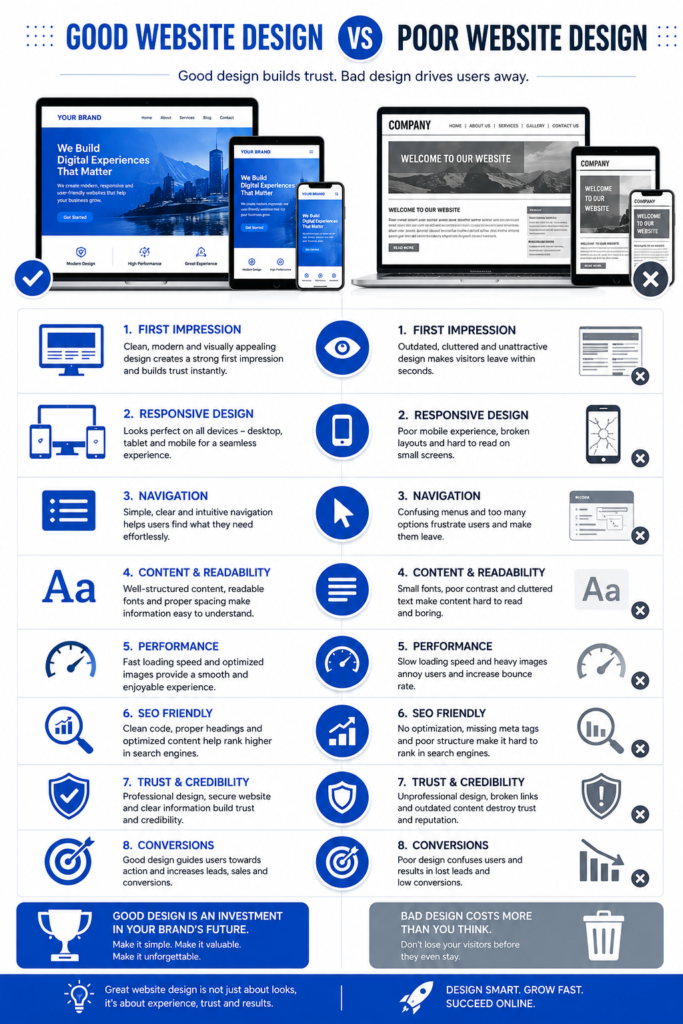
A website is often the first impression people have of your business or personal brand.
Good website design helps you:
- Build trust and credibility
- Increase user engagement
- Improve search engine rankings
- Generate more leads
- Boost conversions
- Strengthen your online presence
In today’s digital world, your website speaks before you do. Make sure it tells the right story.
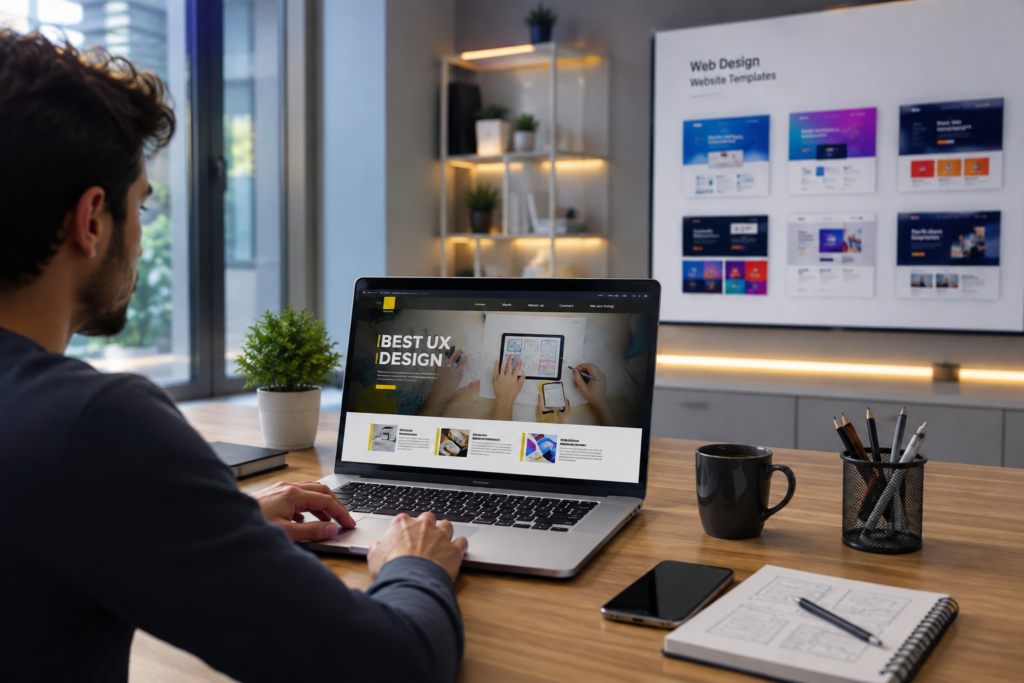
AI Image Prompt
Create a modern workspace featuring a web designer using a laptop with colorful website layouts on the screen, minimal desk setup, soft natural lighting, futuristic office environment, ultra-realistic, 4K.
Step 1: Learn the Fundamentals of Website Design
Before choosing tools or templates, understand the basics.
Learn These Core Principles
- Color Theory
- Typography
- Layout Design
- White Space
- Visual Hierarchy
- Accessibility
- Responsive Design
These elements work together like verses in a poem, creating harmony between beauty and functionality.
Understand HTML and CSS Basics
Even if you use website builders, learning basic HTML and CSS gives you greater creative control.
Focus on:
- HTML structure
- Headings
- Images
- Links
- Lists
- CSS colors
- Fonts
- Margins
- Flexbox
- Grid Layout
You don’t need to become a programmer overnight. Learn one concept each day, and soon you’ll understand how websites come to life.
Step 3: Choose the Right Website Design Tools
Modern designers have access to powerful tools.
Popular options include:
| Tool | Purpose | Beginner Friendly |
|---|---|---|
| Figma | UI Design | ✅ Yes |
| WordPress | Website Builder | ✅ Yes |
| Elementor | Drag-and-Drop Design | ✅ Excellent |
| Adobe XD | Wireframing | ✅ Yes |
| Canva | Graphics | ✅ Very Easy |
If you’re just starting, WordPress with Elementor is one of the easiest ways to create professional websites without coding.
Step 7: Create High-Quality Visual Content
Visual elements capture attention instantly.
Include:
- Professional images
- Custom icons
- Infographics
- Videos
- Animations
- Interactive sections
Every image should support your message instead of distracting from it.
Step 8: Test Before Publishing
Never launch a website without testing.
Check:
- Broken links
- Mobile responsiveness
- Browser compatibility
- Loading speed
- Contact forms
- Navigation
- Grammar and spelling
A polished website reflects professionalism and builds confidence.
Website Design Best Practices
Pro Tip: Design for People First
Many beginners focus only on making websites look beautiful.
Professional designers focus on solving user problems.
Ask yourself:
- Is navigation simple?
- Can visitors find information quickly?
- Is every button useful?
- Does the design build trust?
Beauty attracts attention, but usability earns loyalty.
Common Website Design Mistakes
Avoid these common errors:
- Too many colors
- Tiny fonts
- Slow loading pages
- Poor mobile experience
- Low-quality images
- Complicated navigation
- Ignoring accessibility
A clean and focused design almost always outperforms a complicated one.
Website Design Checklist
Before launching your website, ensure you have:
- ✅ Responsive layout
- ✅ Fast loading speed
- ✅ Clear navigation
- ✅ Optimized images
- ✅ SEO-friendly headings
- ✅ Secure HTTPS
- ✅ Contact information
- ✅ Call-to-action buttons
- ✅ Mobile compatibility
- ✅ Error-free content
Conclusion
Learning website design is a journey where creativity meets purpose. Each page you create is an opportunity to inspire, inform, and connect with your audience.
Start with the fundamentals, practice consistently, and never stop improving. Like a poem refined through every thoughtful line, your website grows stronger with every adjustment. With patience, curiosity, and dedication, you can design websites that are not only visually stunning but also fast, user-friendly, and optimized for success.
Frequently Asked Questions
What is website design?
Website design is the process of creating the layout, appearance, and user experience of a website to make it attractive, functional, and easy to navigate.
How long does it take to learn website design?
Most beginners can learn the basics within one to three months with regular practice. Mastery comes through building real projects and continuous learning.
Is coding necessary for website design?
No. Platforms like WordPress and Elementor allow you to design professional websites without coding. However, learning basic HTML and CSS is highly beneficial.
What is the best tool for beginners?
WordPress with Elementor is one of the best beginner-friendly tools because it combines flexibility, ease of use, and professional design capabilities.